
- Viability is preserved: Vitrification allows embryos to remain fully viable indefinitely when kept at stable liquid nitrogen vapor temperatures (−320.8°F).
- X-ray protection is critical: Airport X-rays pose radiation risks to cellular DNA; medical cryogenic couriers bypass security scanners via strict physical inspection protocols.
- Hand-carry is non-negotiable: Dedicated onboard couriers prevent transit delays, rough cargo handling, and orientation failure of dry shippers.
- Compliance eliminates border delays: International transport requires meticulous cross-border documentation, IATA compliance, and direct lab-to-lab coordination.
Relocating biological material across borders is one of the most emotionally charged steps in third-party reproduction and cross-border fertility care. Whether you are an intended parent pursuing surrogacy abroad or an embryology lab director managing a patient transfer, one question always surfaces first: Is international embryo transport truly safe?
Let us separate the myths from clinical reality.
Myth 1: Long Flights and Distance Degrade Embryo Quality
The Reality: Distance does not impact cell viability. Temperature stability does.
Modern embryology relies on vitrification — an ultra-rapid freezing technique that prevents ice crystal formation by turning cellular fluid into a glass-like solid. In this state, metabolic activity ceases entirely. Biologically speaking, an embryo does not age whether it stays frozen for two days or two decades.
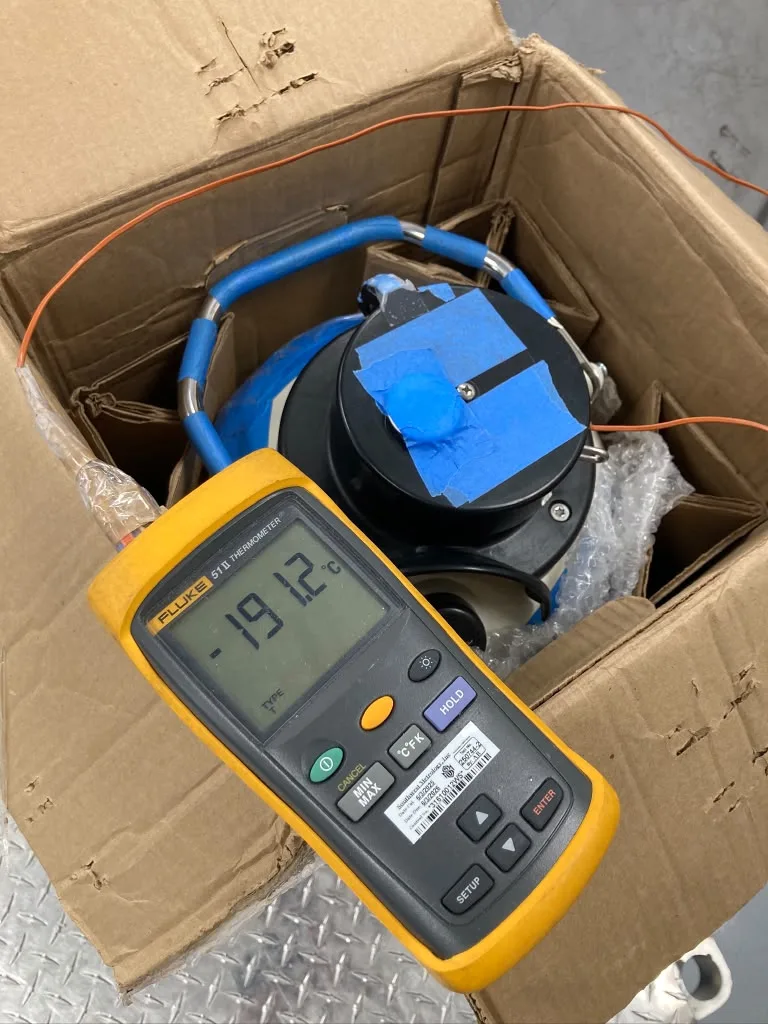
The sole risk during transport is thermal fluctuation. We maintain strict temperature control guaranteed by our advanced cryogenic dry vapor shippers, providing up to 27 days of dynamic holding capacity (−238°F to −320.8°F) using liquid nitrogen vapor absorbed into a specialized hydrophobic porous matrix. At Geld IVF Courier, transport tanks are charged and verified using industry-leading MVE Chart dry shippers with internal temperature data loggers and proactive milestone status updates, ensuring the cold chain remains unbroken from clinic release to destination thaw.
Myth 2: Standard Cargo Couriers Are Sufficient for Cryopreserved Cells
The Reality: Commercial freight networks are built for parcels, not human genetics.
Standard international shipping services route packages through automated conveyor belts, uncontrolled cargo holds, and customs sorting facilities where parcels sit unmonitored for days. If a dry shipper tips over or gets delayed in customs clearance, cryopreserved samples face catastrophic warming events.
High-stakes reproductive logistics demand a dedicated hand-carry protocol:
- Personal Custody: A trained medical courier maintains physical possession of the dry shipper inside the aircraft cabin at all times.
- Upright Securing: Gravity-fed liquid nitrogen vapor distribution requires shippers to remain upright; cabin transport guarantees this orientation.
- Chain-of-Custody Documentation: Direct milestone sign-offs occur directly between embryologists, ensuring zero third-party handoffs.

Myth 3: Airport Security Scanners Will Irradiate the Embryos
The Reality: Standard airport X-ray machines and CT scanners emit ionizing radiation that can compromise embryonic DNA integrity — and embryos should never pass through them.
Safe transit requires trained couriers operating under international civil aviation regulations (IATA) and local aviation authority exemptions (such as TSA guidelines). Geld IVF Courier coordinates pre-cleared physical security inspections directly with airport security supervisors and customs officials worldwide.
Our couriers carry comprehensive documentation portfolios — including clinic origin declarations, export/import permits, and non-hazmat dry shipper certifications — ensuring that dry shippers bypass X-ray tunnels entirely via visual and swab-based physical checks.
Key Protocols That Define Safe Cryogenic Transit
Ensuring a safe transfer requires a strict operational framework across medical, legal, and transit domains:
Lab-to-Lab Direct Coordination
Pre-verifying receipt protocols, tank compatibility, and specific canister dimensions directly with both donor and receiving embryology teams.
Regulatory & Customs Clearance
Pre-approving cross-border permits (FDA, EU Tissues and Cells Directive, or local health authorities) prior to physical pickup to eliminate border holds.
Data Integrity & Traceability
Supplying comprehensive temperature logs immediately upon delivery to confirm that biological integrity remained constant at −320.8°F throughout transit.
Frequently Asked Questions
-
Is it safe to transport embryos internationally?
Yes. When managed under strict medical logistics protocols using certified dry shippers and hand-carry couriers, international embryo transport achieves viability rates comparable to embryos that never left their original lab. The key risk factor is not distance but temperature stability — specialized cryogenic dry shippers maintain temperatures of −320.8°F for 7–10 days using liquid nitrogen vapor.
-
Can airport X-rays damage frozen embryos?
Yes, standard airport X-ray machines and CT scanners emit ionizing radiation that can compromise embryonic DNA integrity. Certified IVF couriers bypass security scanners entirely through pre-arranged physical inspection protocols coordinated directly with airport security supervisors and customs officials worldwide.
-
Why can't I use a standard shipping service for embryo transport?
Standard shipping services route packages through automated conveyor belts, uncontrolled cargo holds, and customs sorting facilities where dry shippers can tip over, causing catastrophic warming events. Safe embryo transport requires a dedicated hand-carry courier who maintains physical possession of the dry shipper inside the aircraft cabin at all times, ensuring the container remains upright and the cold chain unbroken.
-
How long can embryos remain frozen during international transport?
Through vitrification, embryos can remain fully viable indefinitely when kept at stable liquid nitrogen vapor temperatures (−320.8°F). We maintain strict temperature control guaranteed by our advanced cryogenic dry vapor shippers, providing up to 27 days of dynamic holding capacity, providing ample buffer for international long-haul routes and any customs delays.
Protect Your Journey with Dedicated Care
Safe embryo transport relies on precision engineering, regulatory expertise, and continuous oversight. Speak with an international logistics specialist at Geld IVF Courier today to review your transport route and receive a transparent, comprehensive quote.
Request a Quote

